



Who Is Robert Parker and Why He Matters
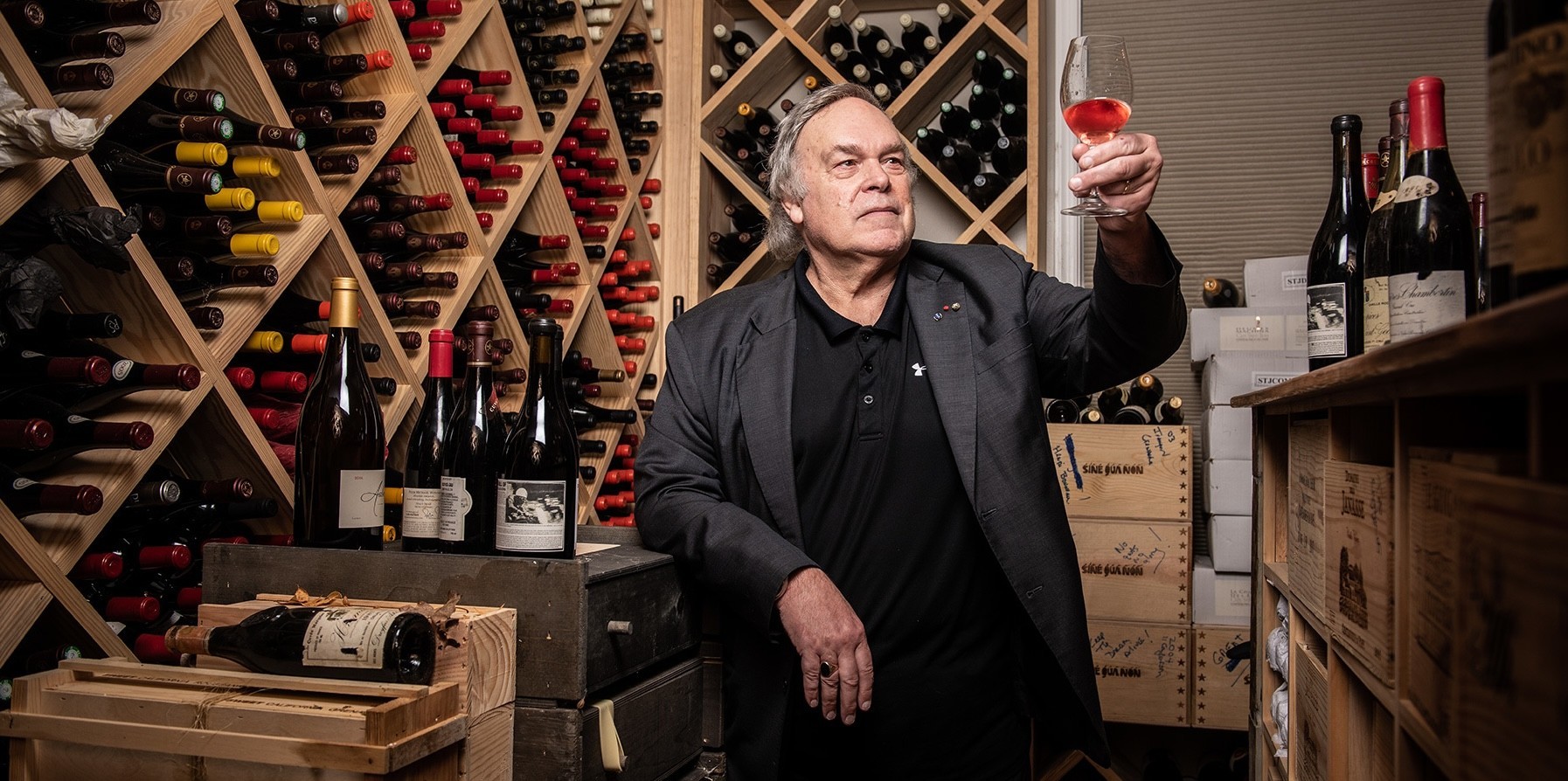
Robert Parker is an American wine critic best known as the founder of The Wine Advocate. Since the late 1970s, his writing and scoring have played a significant role in shaping how fine wine is evaluated, priced and traded, particularly at the upper end of the market.
For many investors and collectors, Parker’s influence is most visible through numbers. His use of the 100 point scoring system helped make wine quality easier to compare across producers, regions and vintages. Over time, those scores became embedded in the mechanics of the fine wine market itself.
Understanding Parker’s role is therefore less about personal taste and more about market structure.
The Wine Advocate and the Rise of Scoring
The Wine Advocate was launched in 1978 as an independent publication, initially focused on Bordeaux. At the time, much of wine criticism was opaque, relationship driven and difficult for international buyers to interpret.
Parker took a different approach. Wines were scored numerically and reviewed with a clear point of view. A single score could be read, understood and acted upon by buyers anywhere in the world.
This mattered because it reduced friction. Buyers no longer needed deep regional knowledge or direct access to merchants to form a view on quality. A score became a portable signal.
As the publication’s readership grew, so did the market’s sensitivity to those scores.
Parker’s Influence by Region
Parker’s impact was not uniform across the wine world.
He was particularly influential in Bordeaux, where en primeur pricing became closely tied to his early assessments. High scores often translated directly into higher release prices and stronger early secondary market demand.
His influence also extended into the Rhône, where he played a major role in elevating the global profile of producers such as Châteauneuf du Pape and Hermitage, and into parts of California, where his preferences aligned with richer, more powerful styles during the 1990s and early 2000s.
In regions where production volumes were sufficient to support secondary market trading, Parker’s scores became especially powerful price signals.
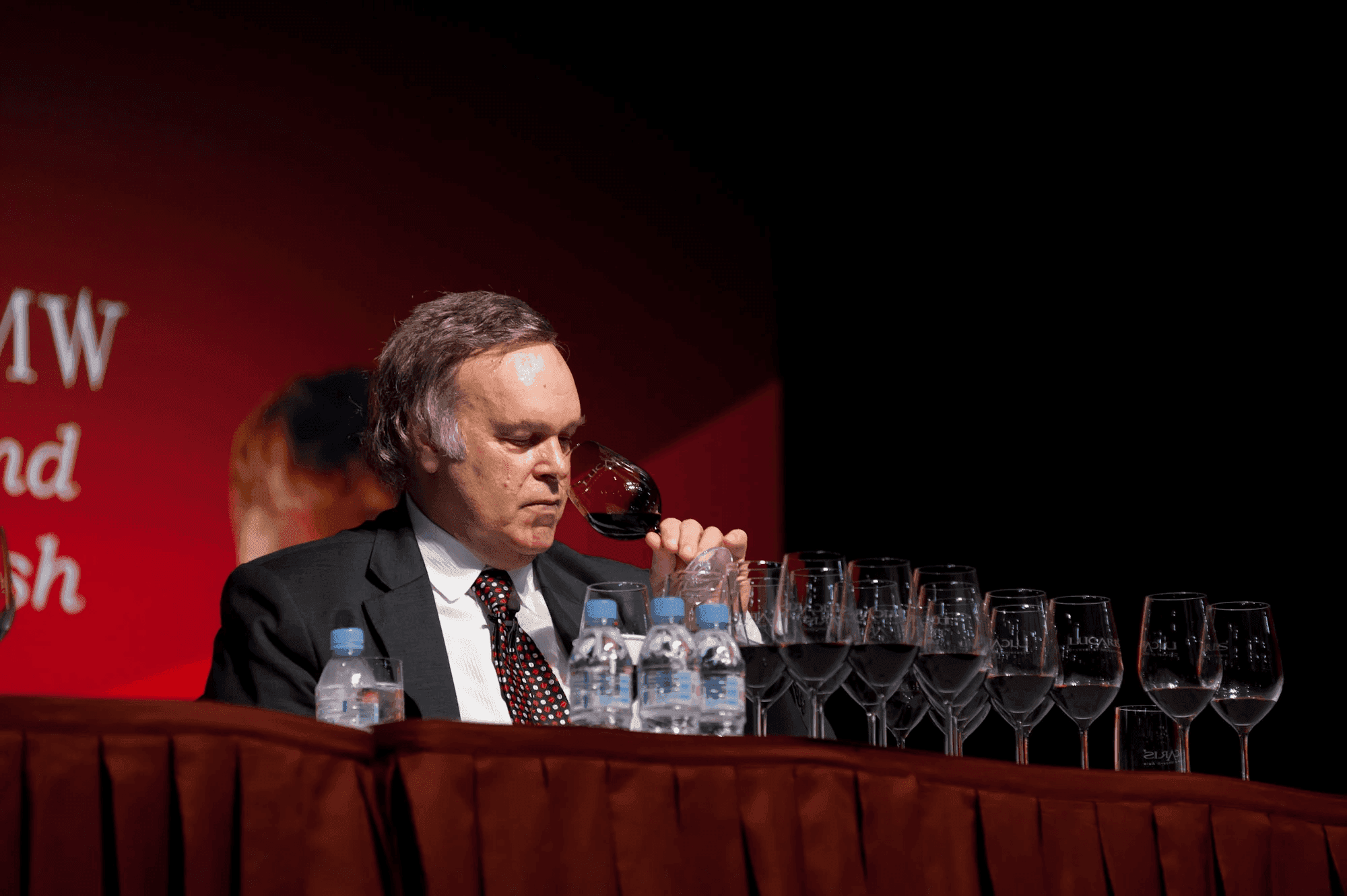
Parkerisation and Style Drift
As Parker’s influence grew, a phenomenon emerged that became known as Parkerisation.
Producers, consciously or not, began adjusting winemaking styles to appeal to the palate that appeared to score well. This often meant riper fruit, higher alcohol, more extraction and more new oak.
In some regions, this led to a degree of stylistic convergence. Wines became more homogeneous, at least at the top end of the market, as producers competed for critical recognition and the pricing power that came with it.
While this increased short term demand and visibility, it also sparked debate around diversity, regional identity and long term drinkability.
Parker and Other Critics
Parker did not invent numerical scoring, nor does he operate in isolation today.
Other critics and publications, including Wine Spectator, James Suckling, Vinous, Wine Enthusiast and Jancis Robinson, also use structured scoring systems, often on similar scales. Each has developed influence in different regions and market segments.
The key distinction is not the existence of scores, but how markets respond to them. Some critics have a measurable impact on price formation in certain regions. Others primarily influence consumer sentiment or short term demand.
The market has learned to differentiate.
Scores, Prices and the Price Per Point Effect
As scoring systems became embedded in the market, prices began to anchor not just to quality, but to quality relative to price.
One way this shows up is through price per point ratios. Two wines may receive the same score, but trade at very different prices. Conversely, some wines command significantly higher prices for relatively small differences in score.
This matters because scores are not linear in their economic impact. The difference between 94 and 96 points can have a disproportionate effect on demand and pricing, particularly in regions where critical opinion strongly influences buying behaviour.
Over time, markets tend to normalise these relationships. Wines that are expensive relative to their score often struggle to outperform unless scarcity or brand power compensates. Wines that offer strong scores relative to price tend to see more consistent demand and, in some cases, stronger price appreciation.
Understanding this dynamic is more useful than focusing on scores in isolation.
How Scores Behave Over Time
One important feature of critical opinion is that it evolves.
Wines are often rescored after bottling, and again after several years of ageing. Initial en primeur scores may be revised up or down as wines develop, and these revisions can influence price performance, particularly in the early years of a wine’s life.
However, the impact of rescoring varies by region and by critic. In some markets, early scores dominate pricing behaviour. In others, long term trading history matters more.
How WineFi Uses Critic Scores
At WineFi, critic scores are treated as inputs, not conclusions.
Our quantitative models incorporate both initial scores and subsequent rescores, but they are weighted based on observed influence on price performance within a given region. Critics are therefore weighted differently depending on where their opinions historically move prices.
We also analyse how scores relate to price through metrics such as price per point, allowing us to identify wines that are priced efficiently, aggressively, or attractively relative to their critical reception.
Scores are contextualised alongside liquidity, trading frequency, production scale and long term price data. No single score, or critic, determines an investment decision.
Closing Thoughts
Robert Parker’s significance lies in how he helped standardise the communication of quality at a global level.
By making wine easier to compare, he contributed to the development of deeper secondary markets and more transparent pricing. His influence also shaped production decisions and market dynamics, particularly in regions where trading activity was already emerging.
Today, Parker is one voice among many. His legacy, however, remains embedded in how fine wine is priced, traded and understood.
For investors, understanding that legacy is less about following scores and more about understanding how scores interact with price, liquidity and time.




Capital is at risk. Wine values can go down as well as up, and investments may not perform as expected. Returns may vary. You should not invest more than you can afford to lose. WineFi is not authorised by the Financial Conduct Authority. Investments are not regulated and you will have no access to the Financial Services Compensation Scheme (FSCS) or the Financial Ombudsman Service (FOS). Past performance and forecasts are not reliable indicators of future results and should not be relied on. Forecasts are based on WineFi’s own internal calculations and opinions and may change. Investments are illiquid. Once invested, you are committed for the full term. Tax treatment depends on individual circumstances and may change.
You are advised to obtain appropriate tax or investment advice where necessary.
WineFi is a trading name of WineFi Management Limited. Registered in England and Wales with registration number: 14864655 and whose registered office is at 5th Floor, 167-169 Great Portland Street, London, United Kingdom, W1W 5PF.