



Appellation Rules: What They Are and Why They Matter

Appellation rules are the legal frameworks that define where a wine comes from and, in many cases, how it is made. They determine what can appear on a label, which grapes may be used, how much wine can be produced, and the minimum standards a wine must meet to carry a regional name.
While appellations are often discussed in terms of tradition or quality, their real importance lies in how they shape supply, consistency, and long-term market behaviour.
What appellations actually do
At their core, appellations exist to protect origin. They ensure that a wine labelled from a specific place genuinely comes from that place, and that it meets agreed standards associated with that region.
Most systems regulate a combination of geography and method. This typically includes defined vineyard boundaries, permitted grape varieties, yield limits, and winemaking practices. These rules are enforced by regulatory bodies, and wines must meet formal criteria before they can use an appellation name.
This shared framework allows wines from different producers and vintages to be compared, traded, and valued across international markets.
The European model: origin and production combined
In much of Europe, appellations regulate not just where wine is made, but how it is made.
France operates under the AOC, or Appellation d’Origine Contrôlée, now formally aligned with the EU’s AOP, Appellation d’Origine Protégée. These designations tightly define geographic boundaries and production rules, embedding scarcity directly into the system.
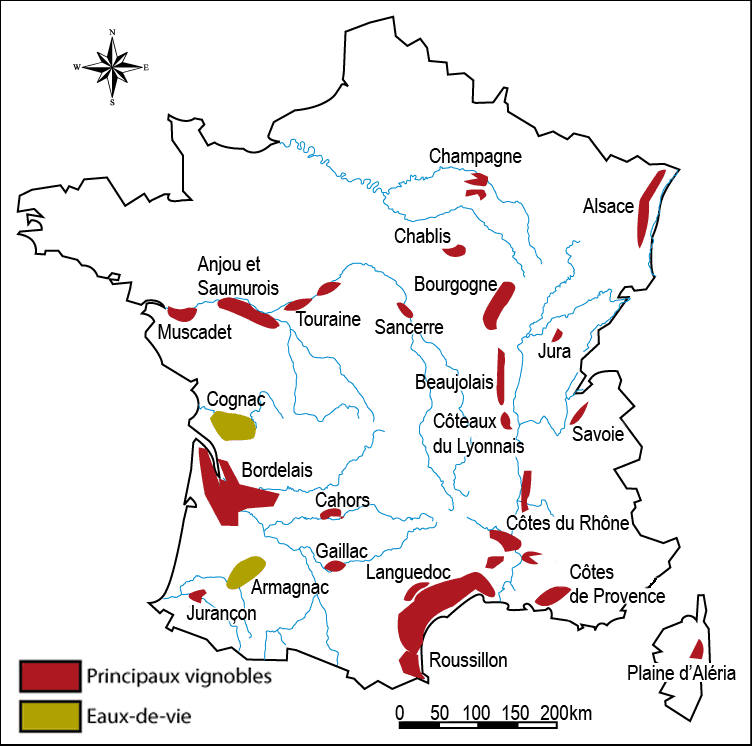
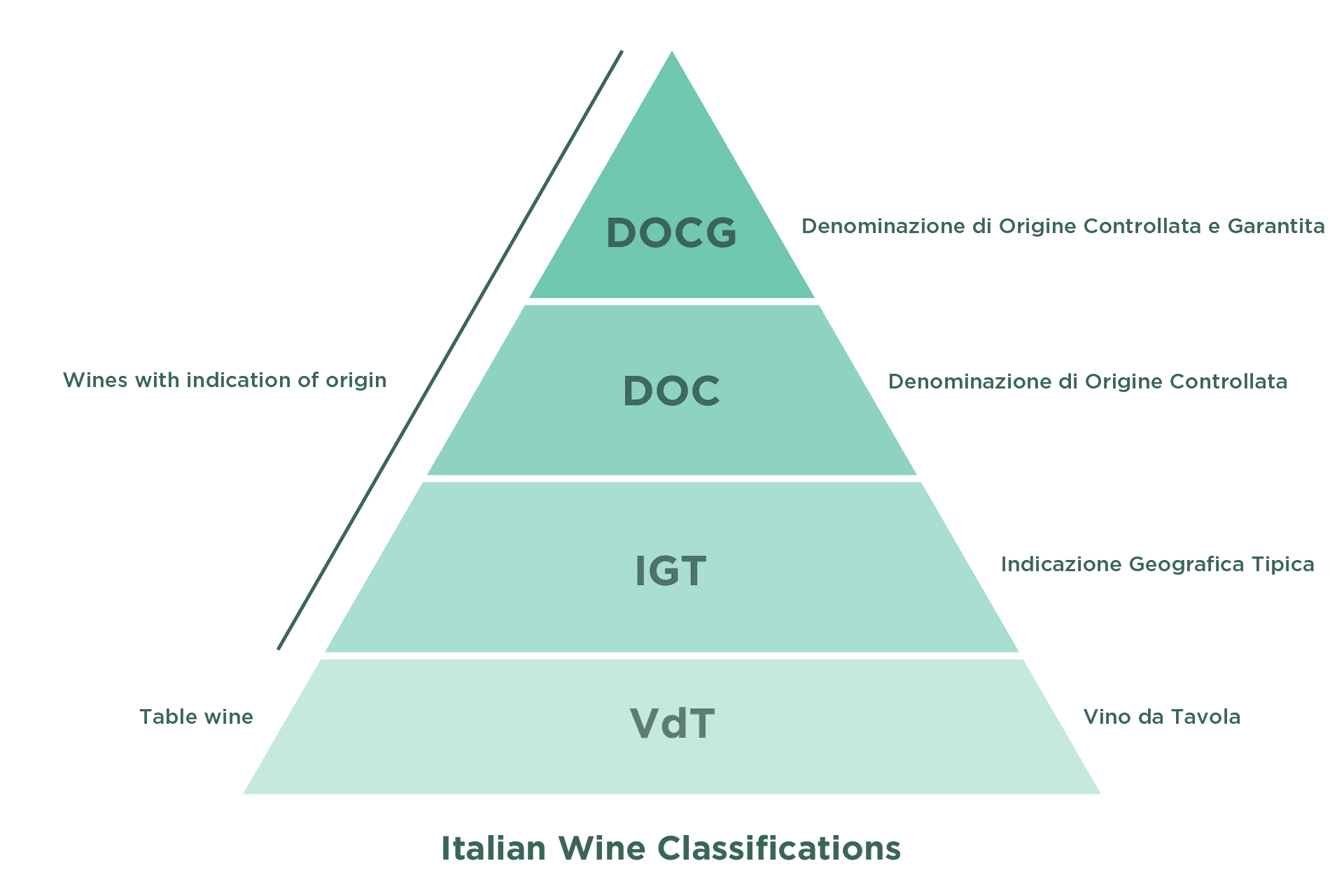
Italy uses a similar structure through DOC, Denominazione di Origine Controllata, with DOCG, Denominazione di Origine Controllata e Garantita, representing the most strictly regulated tier. Spain applies DO and DOCa classifications, while Germany combines regional quality categories with its traditional Prädikat system, which historically focused on grape ripeness at harvest.
Across these countries, vineyard boundaries are fixed and yields are capped. When demand rises, producers cannot simply increase output. Prices, rather than supply, do the adjusting.
Flexible categories and innovation
Alongside these top-tier appellations, most European countries also offer broader designations. France’s IGP, Italy’s IGT, and Spain’s Vino de la Tierra allow greater flexibility in grape choice and winemaking while still indicating geographic origin.
These categories exist to give producers room to innovate outside rigid traditional rules. Some of the world’s most successful modern wines began life in these classifications before building enough reputation to stand on their own.
While appellation prestige remains important, the market ultimately prices reputation, consistency, and demand.
New World approaches: geography first
Outside Europe, appellation systems tend to be far less prescriptive.
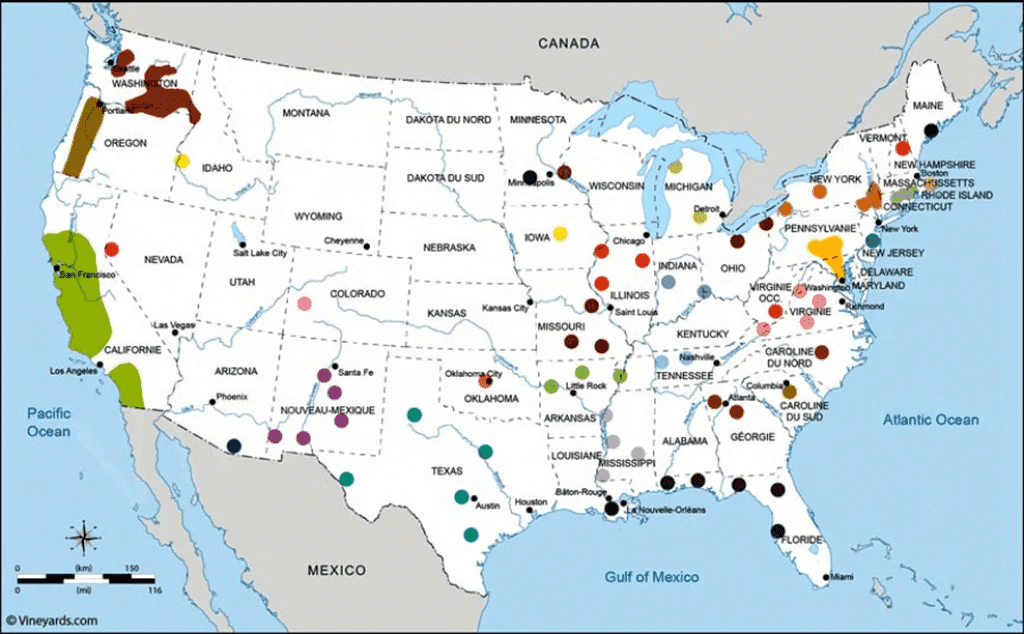
In the United States, American Viticultural Areas (AVAs) define geographic origin but impose few restrictions on grape varieties, yields, or winemaking techniques. A wine labelled with an AVA must source most of its grapes from that area, but stylistic decisions are largely left to the producer.
Australia follows a similar approach through its Geographical Indication (GI) system, focusing on accuracy of origin rather than mandated production methods. The United Kingdom applies PDO and PGI classifications, particularly for English sparkling wine, but again with relatively limited constraints.
These systems prioritise transparency over tradition. They allow producers to respond more freely to market demand, but they do not embed scarcity in the same way as Europe’s tightly regulated appellations.
Why appellation rules matter
Appellations shape more than labels. They influence how much wine can be made, how supply behaves over time, and how scarcity is maintained.
Regions with strict appellation rules and long-established reputations tend to show more stable pricing and deeper secondary market liquidity. Regions with looser frameworks often rely more heavily on producer brand strength to support long-term value.
For anyone looking to understand fine wine beyond consumption, appellations provide essential context. They are not guarantees of quality or performance, but they form the structural backbone of how wine is produced, traded, and priced globally.
In that sense, appellation rules are not just about tradition. They are one of the mechanisms that allow fine wine to function as a coherent international market at all





Capital is at risk. Wine values can go down as well as up, and investments may not perform as expected. Returns may vary. You should not invest more than you can afford to lose. WineFi is not authorised by the Financial Conduct Authority. Investments are not regulated and you will have no access to the Financial Services Compensation Scheme (FSCS) or the Financial Ombudsman Service (FOS). Past performance and forecasts are not reliable indicators of future results and should not be relied on. Forecasts are based on WineFi’s own internal calculations and opinions and may change. Investments are illiquid. Once invested, you are committed for the full term. Tax treatment depends on individual circumstances and may change.
You are advised to obtain appropriate tax or investment advice where necessary.
WineFi is a trading name of WineFi Management Limited. Registered in England and Wales with registration number: 14864655 and whose registered office is at 5th Floor, 167-169 Great Portland Street, London, United Kingdom, W1W 5PF.